
Lyra
Intense Pulsed Light with
Cryoprotection (IPL)
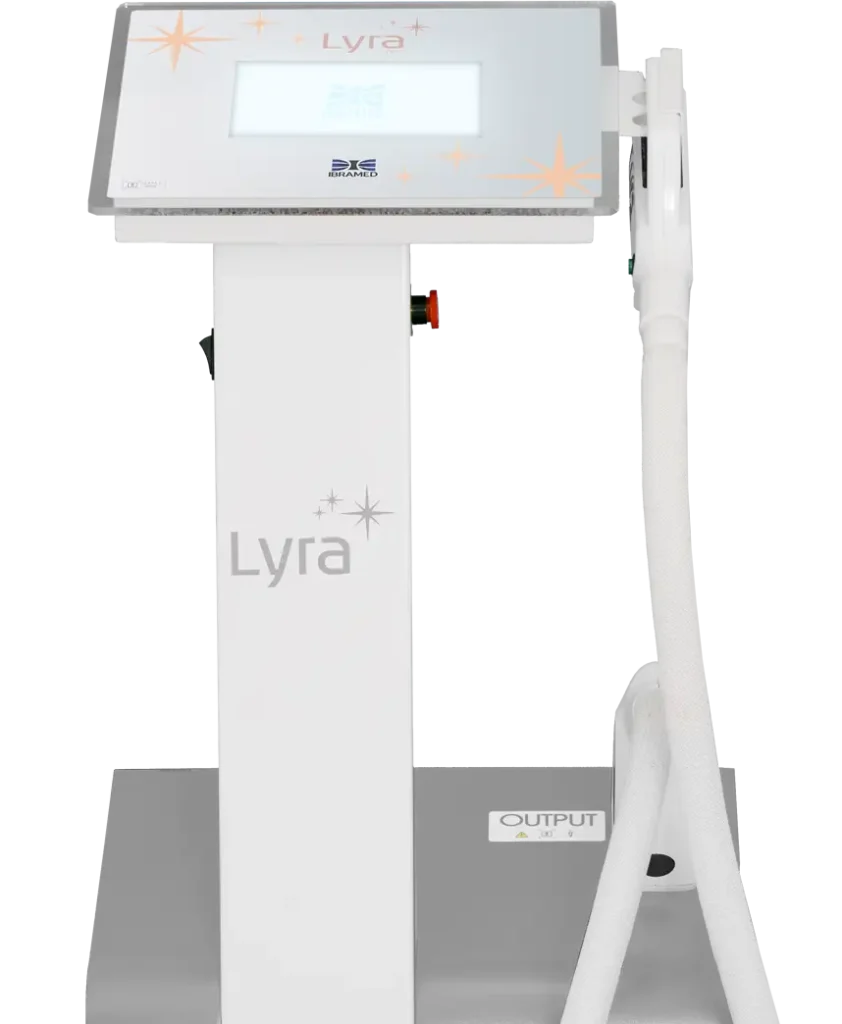
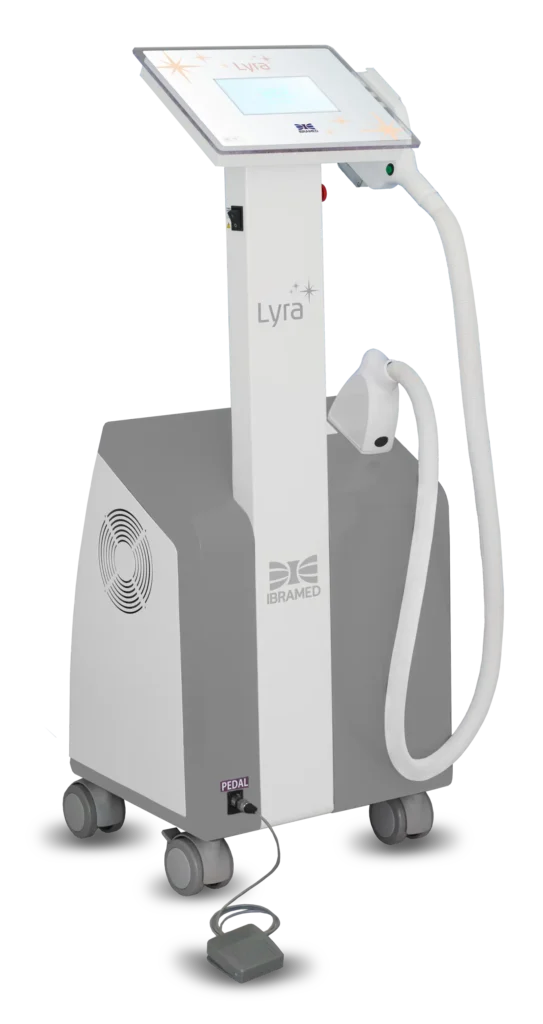
LYRA is a micro-controlled Intense Pulsed Light (IPL) device designed for use in aesthetic medicine and related fields, featuring three selective cut filters (480 nm, 530 nm, 640 nm), enabling the practitioner to select the most appropriate light spectrum for each treatment.
Cryoprotection for Enhanced Application Safety
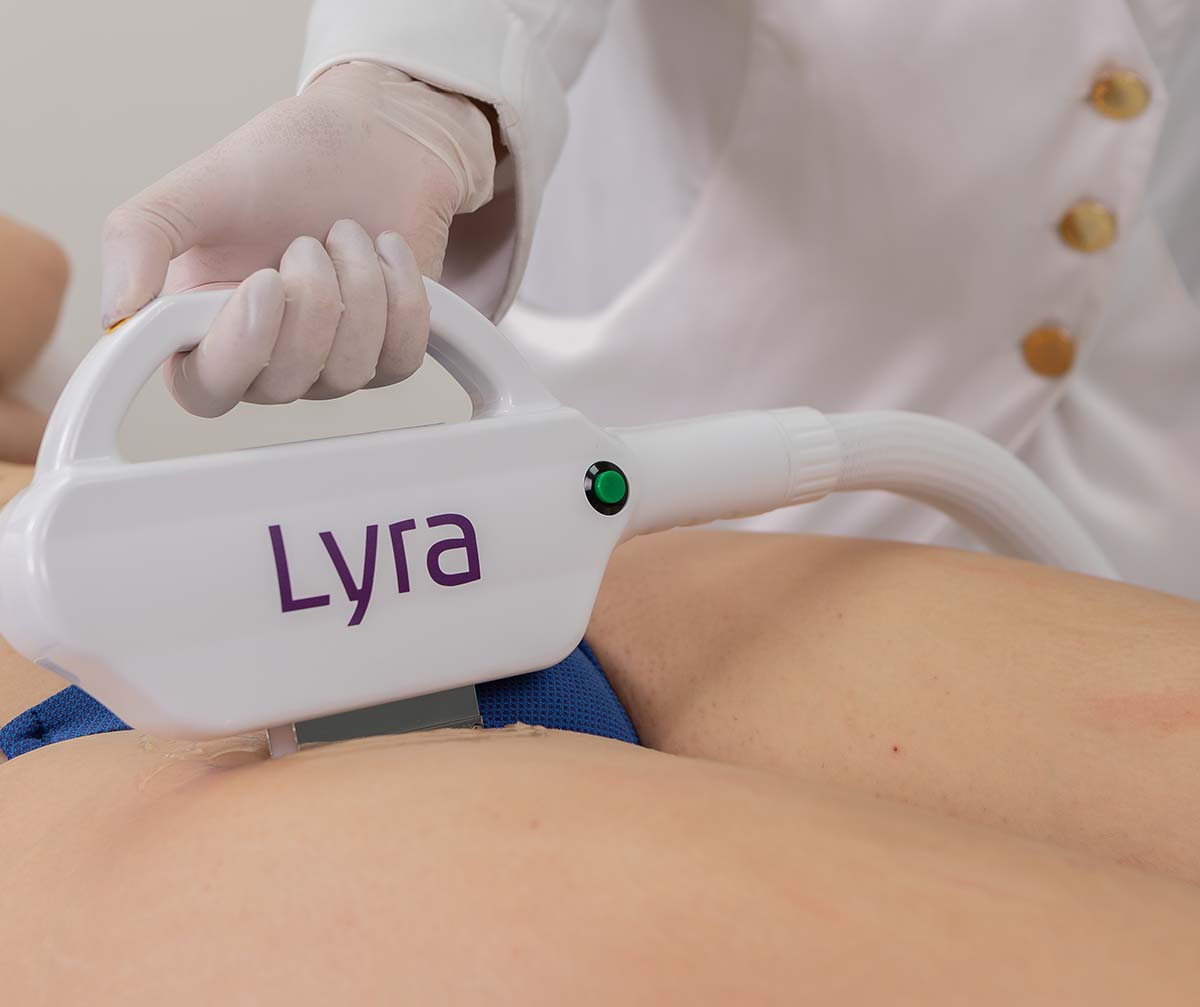
LYRA employs an effective water cooling and Peltier system, known as Cryoprotection, which cools the handpiece tip. This ensures greater safety and comfort—even at high energy levels—through a robust water reservoir and stable cooling throughout the procedure.
Selective Cut Filters
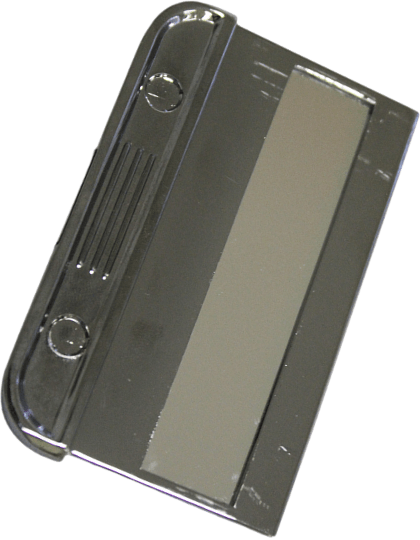
640 nm filter
Targets melanin; primarily indicated for hair removal.
Selective Cut Filters
530 nm filter
Targets hemoglobin; primarily indicated for telangiectasias.
Selective Cut Filters
480 nm filter:
Targets water, oxyhemoglobin, and melanin; primarily indicated for skin rejuvenation and pigmentation (blemishes).
Shot Counter
on the
Applicator
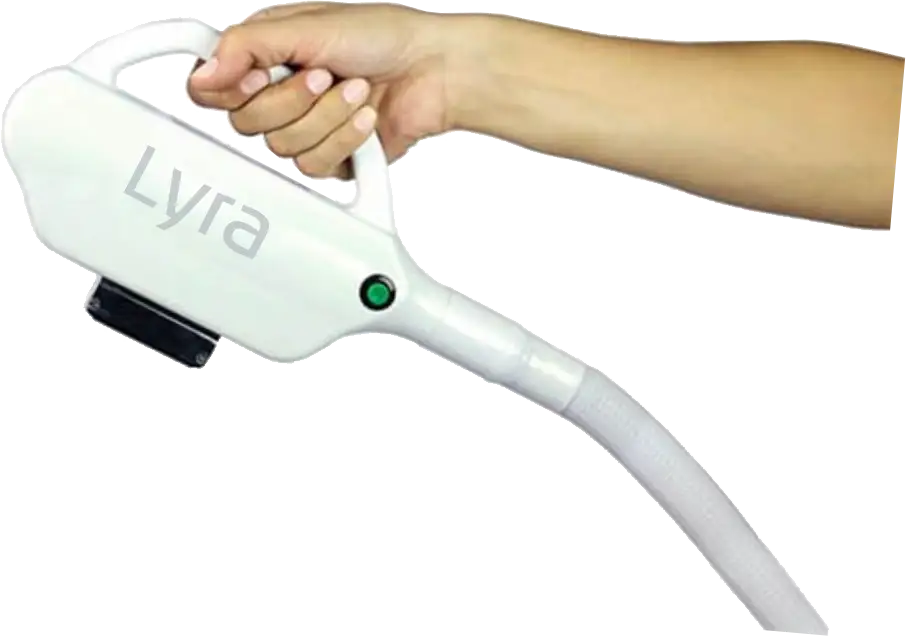
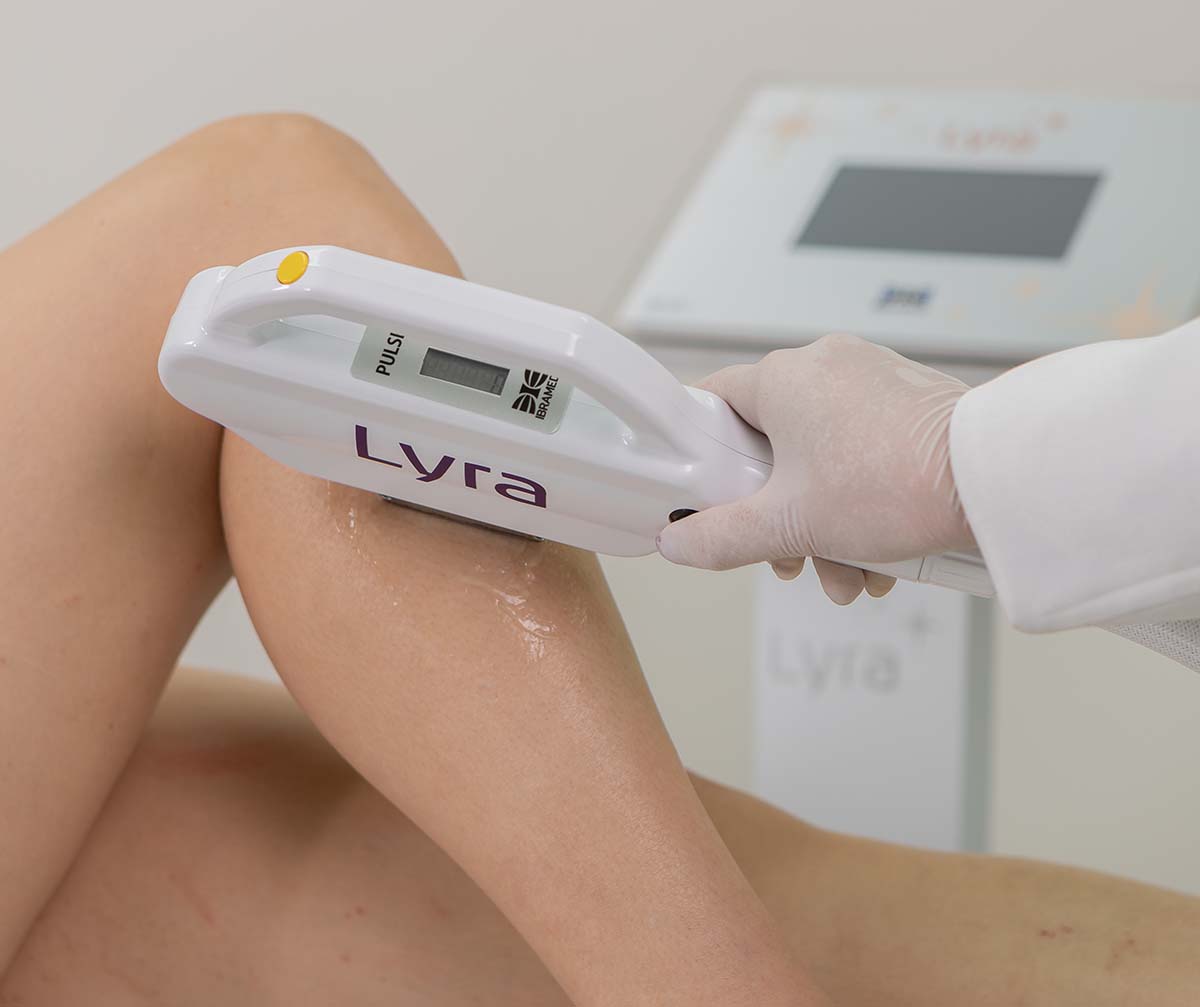
The Lyra includes a built-in, accurate shot counter on the applicator, facilitating monitoring of total shots delivered.
Contador de disparos no aplicador
O Lyra apresenta um contador fiel de disparos totais no
próprio aplicador, o que facilita o acompanhamento em relação ao número de disparos já realizados com o aplicador.
Pre-Programmed, Safe and Effective Protocols
Lyra offers scientifically validated protocols that customize treatment based on skin phototype and hair thickness, delivering personalized recommendations for each patient.




Additional Information
Product Description
The Lyra is a microcontrolled intense pulsed light (IPL) device developed for use in aesthetic medicine, dermatofunctional therapy, aesthetic biomedicine, and other aesthetic fields.
Among its main differentials, the Lyra features:
- Handpiece spot size: 7.5 cm² for versatility and efficiency.
- Cryoprotection system: Combines water and Peltier cooling for patient comfort and safety.
- Long-life lamp: Up to 1.5 million pulses ensures consistent performance over time.
- Modern design: Touchscreen interface and interactive tutorial optimize professional usability.
The equipment must be used exclusively under the prescription and supervision of a licensed professional.
Cut-Off Filters Function
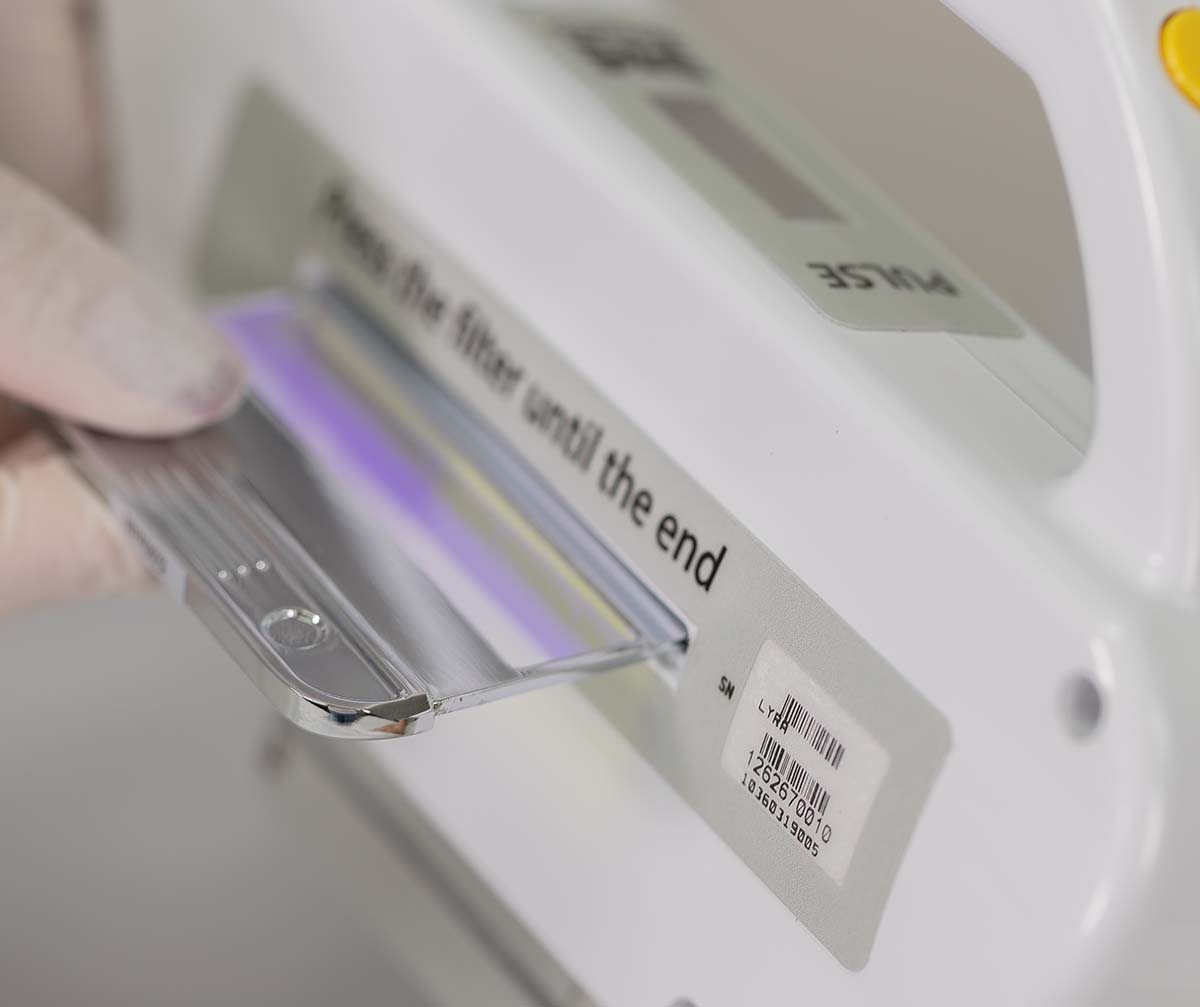
IPL emits a broad spectrum (450–1200 nm). Using filters allows selection of specific wavelength ranges for targeting structures at different tissue depths. For instance, a 640 nm filter restricts emission to 640–1200 nm, blocking shorter wavelengths. Lyra offers three filter options (480 nm, 530 nm, 640 nm) for flexible, precise treatments.
Application Technique Steps
Pre-treatment Preparation
- Confirm absence of recent tanning or contraindicated medications.
- Shave hair—do not wax/depilate.
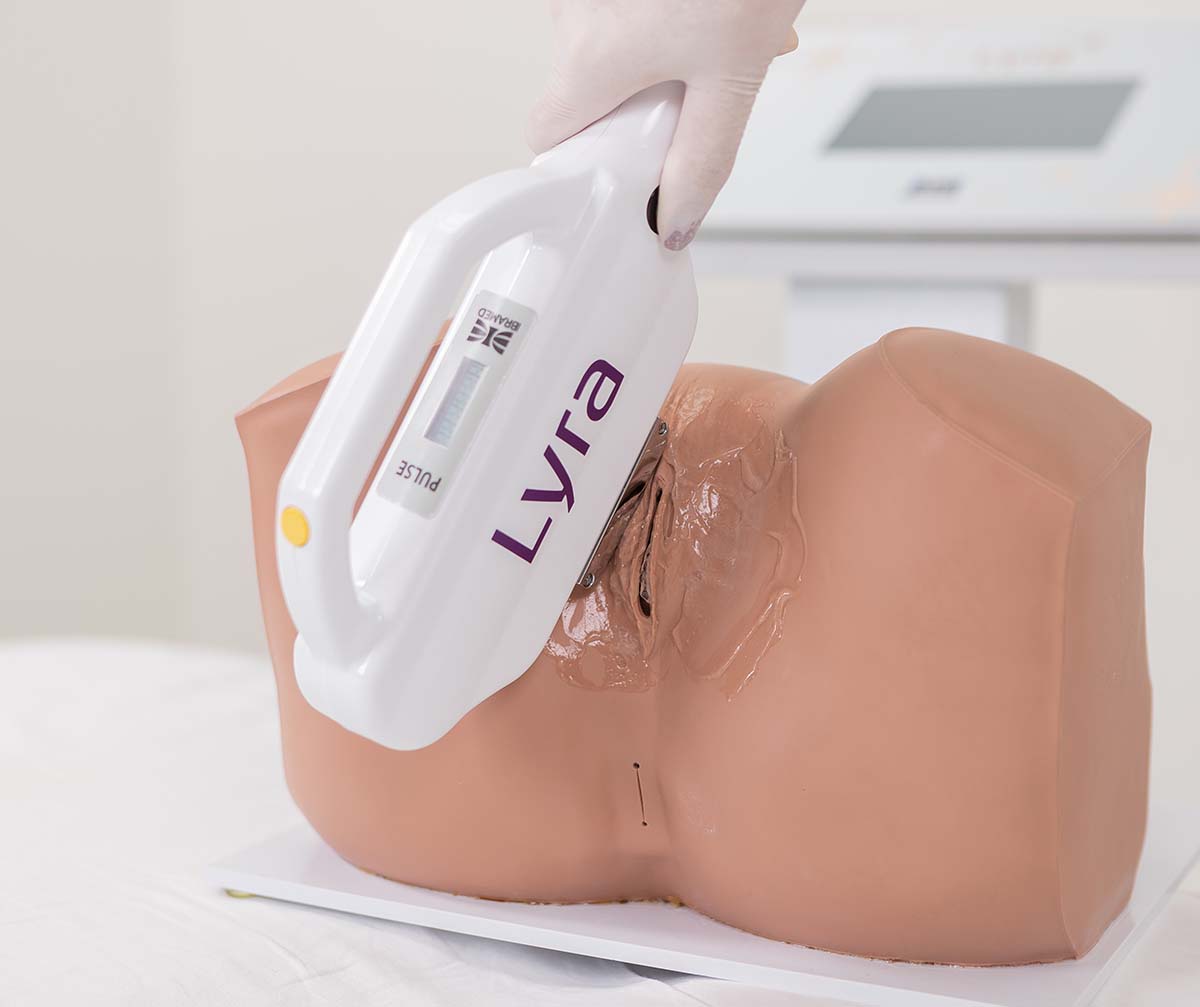
- Clean the area and apply a thin layer of transparent gel.
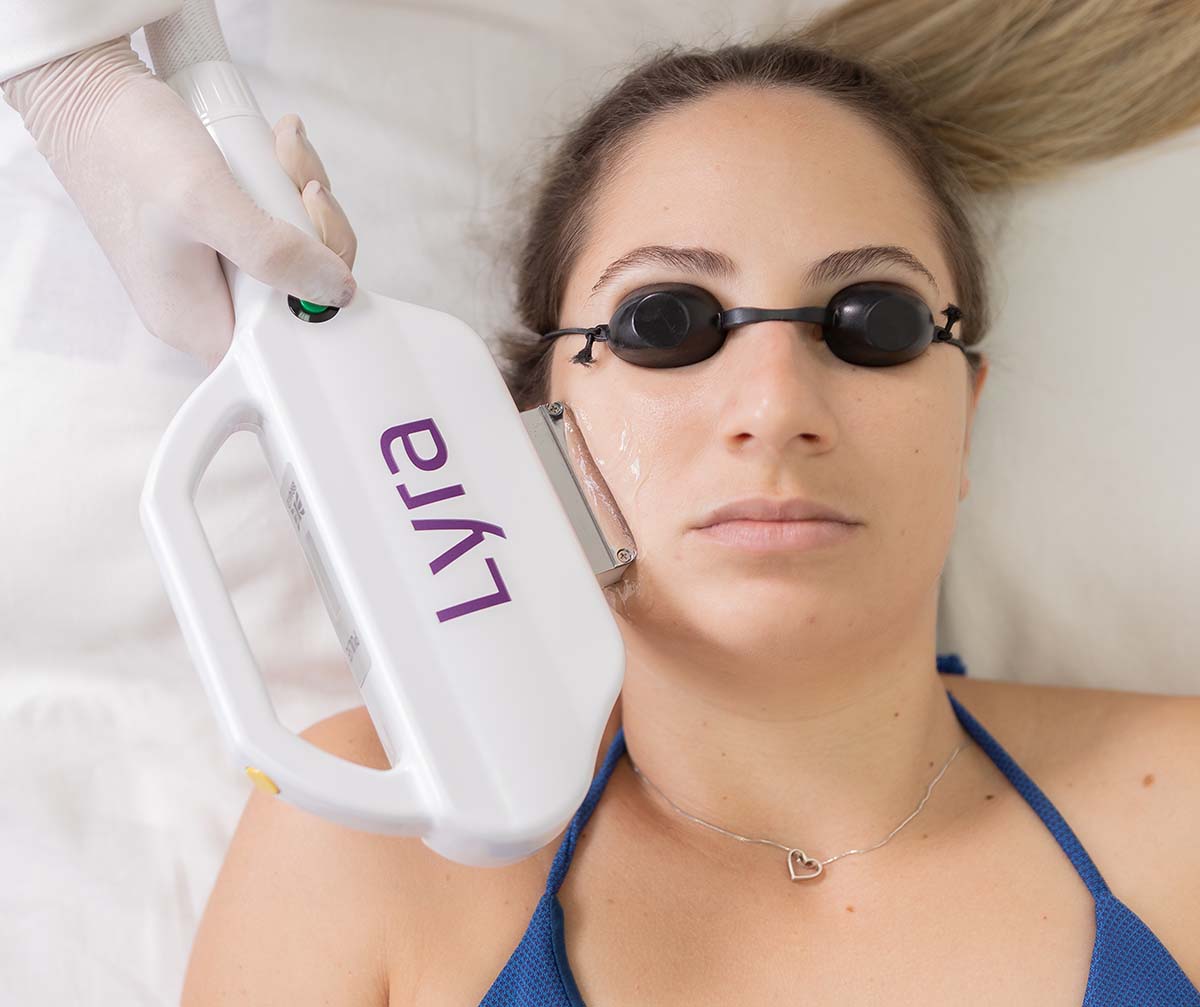
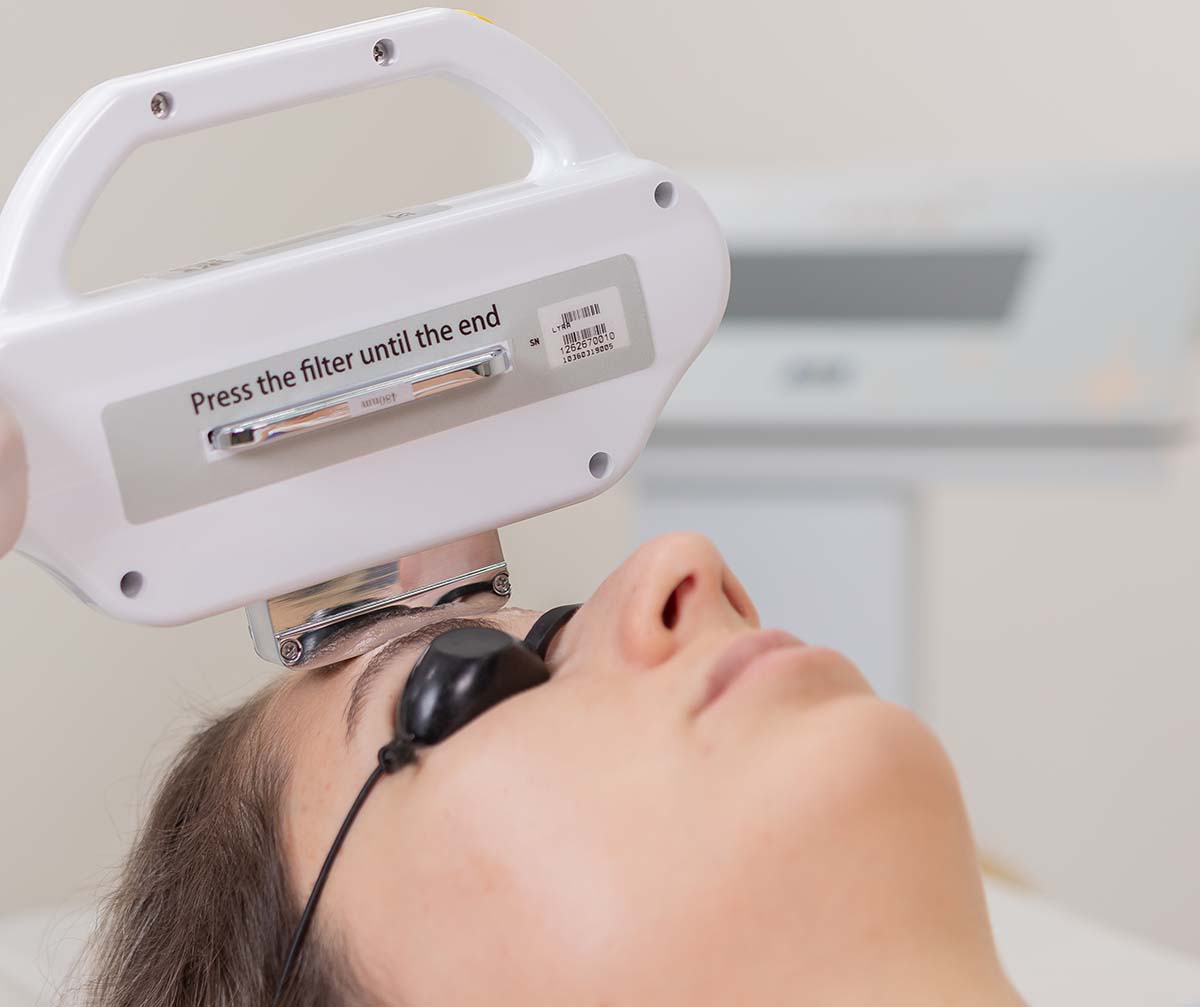
- Use protective eyewear (operator and patient).
- Select the appropriate filter.
- Set programming parameters.
During Treatment
- Operator wears protective eyewear.
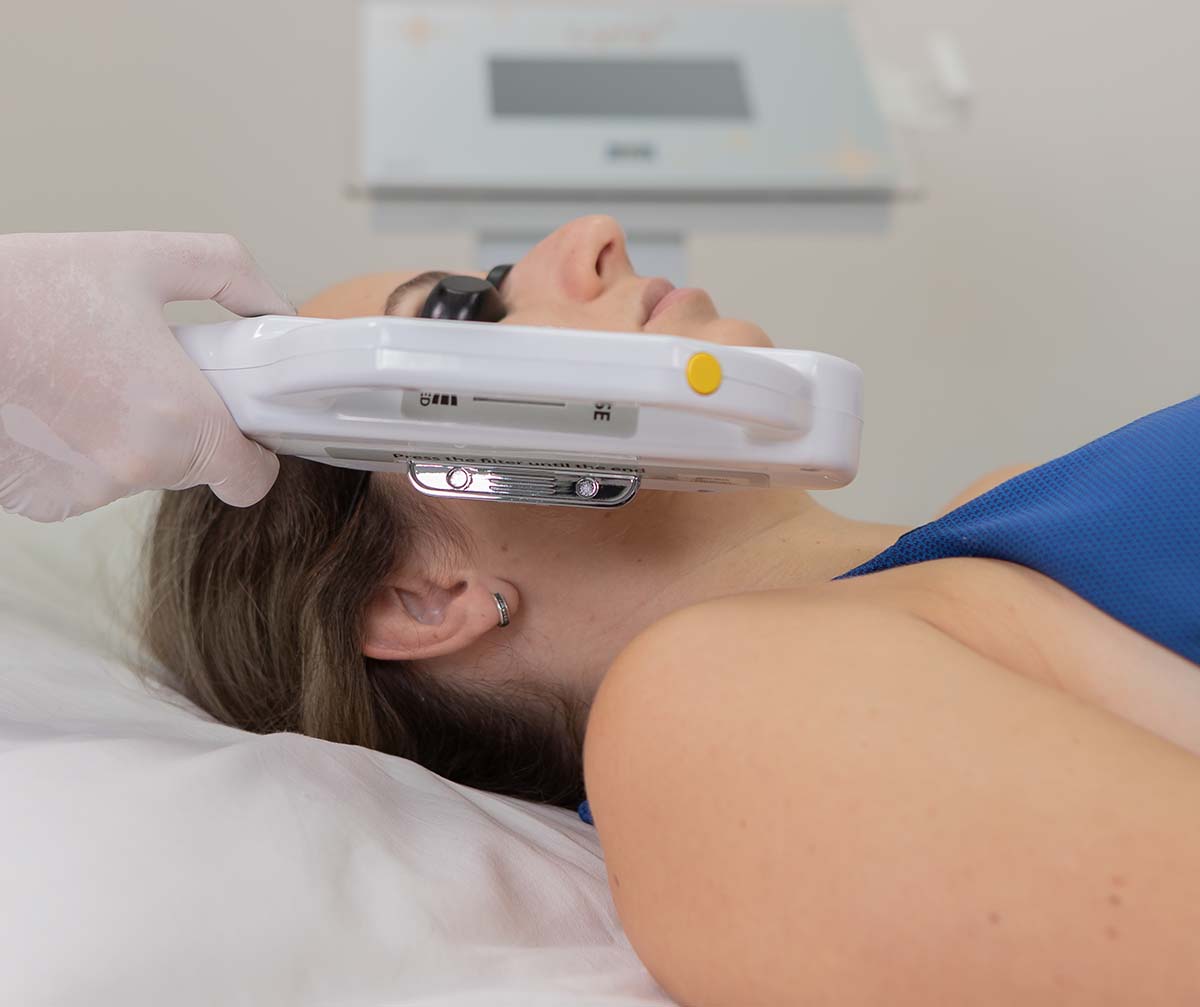
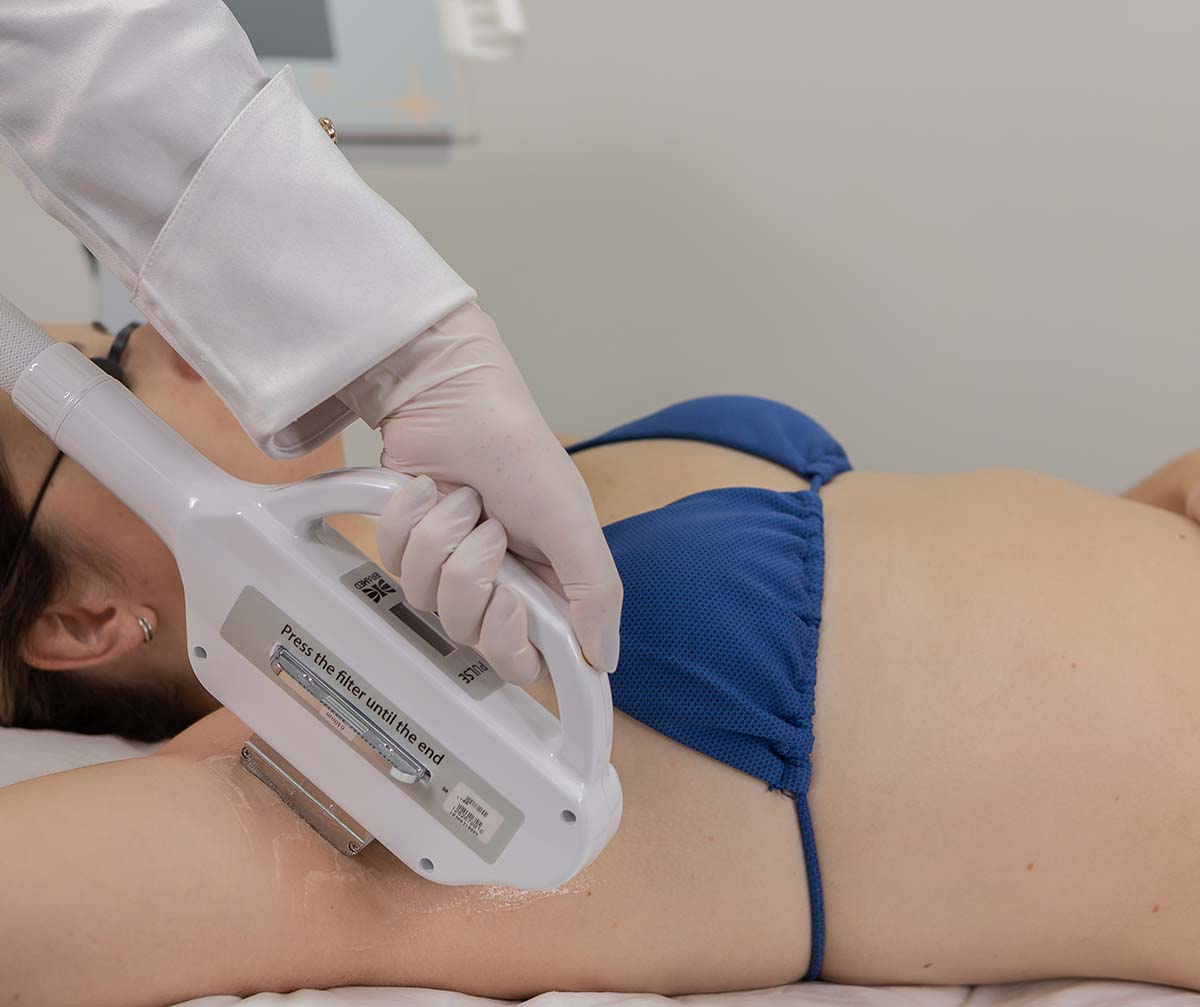
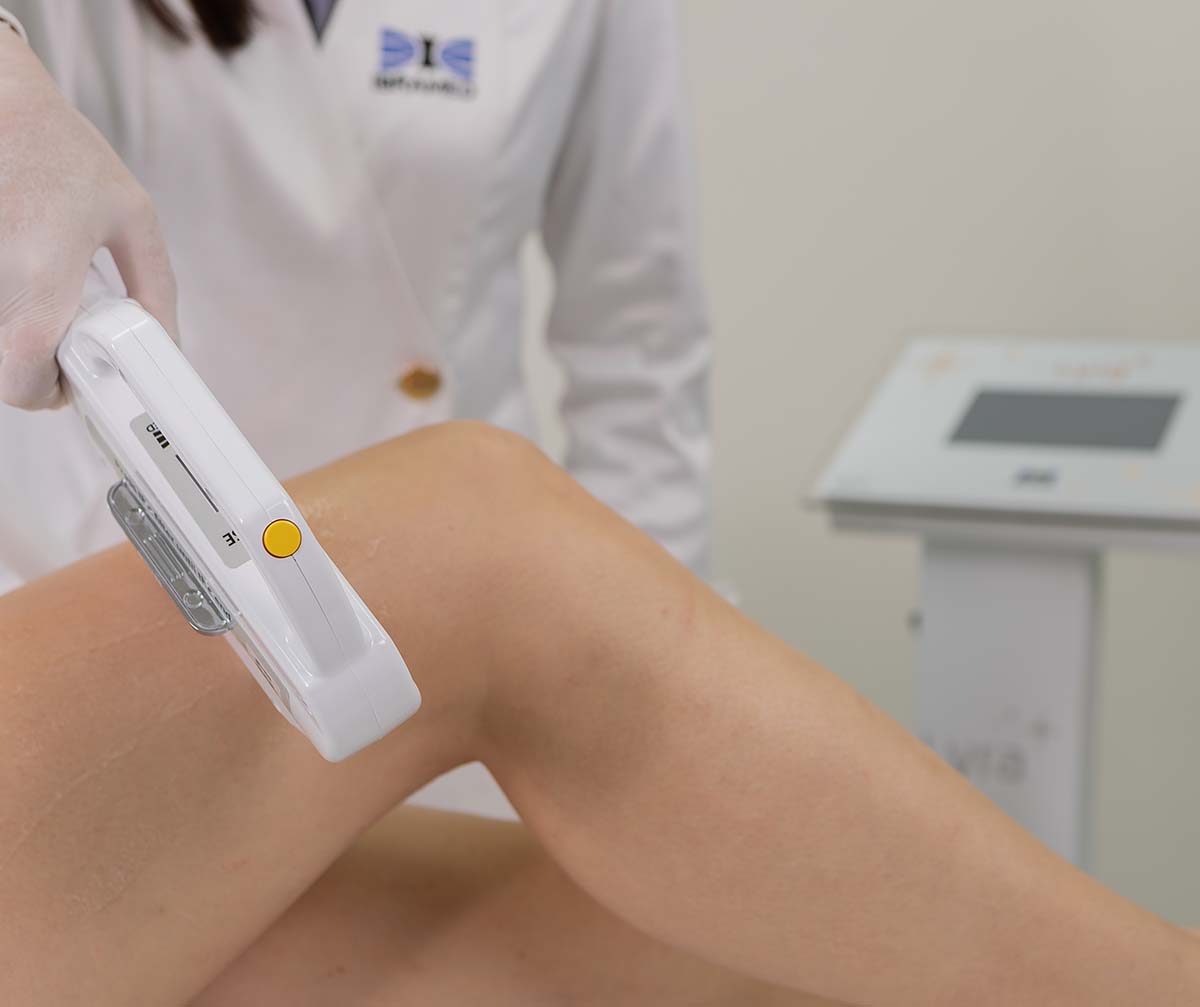
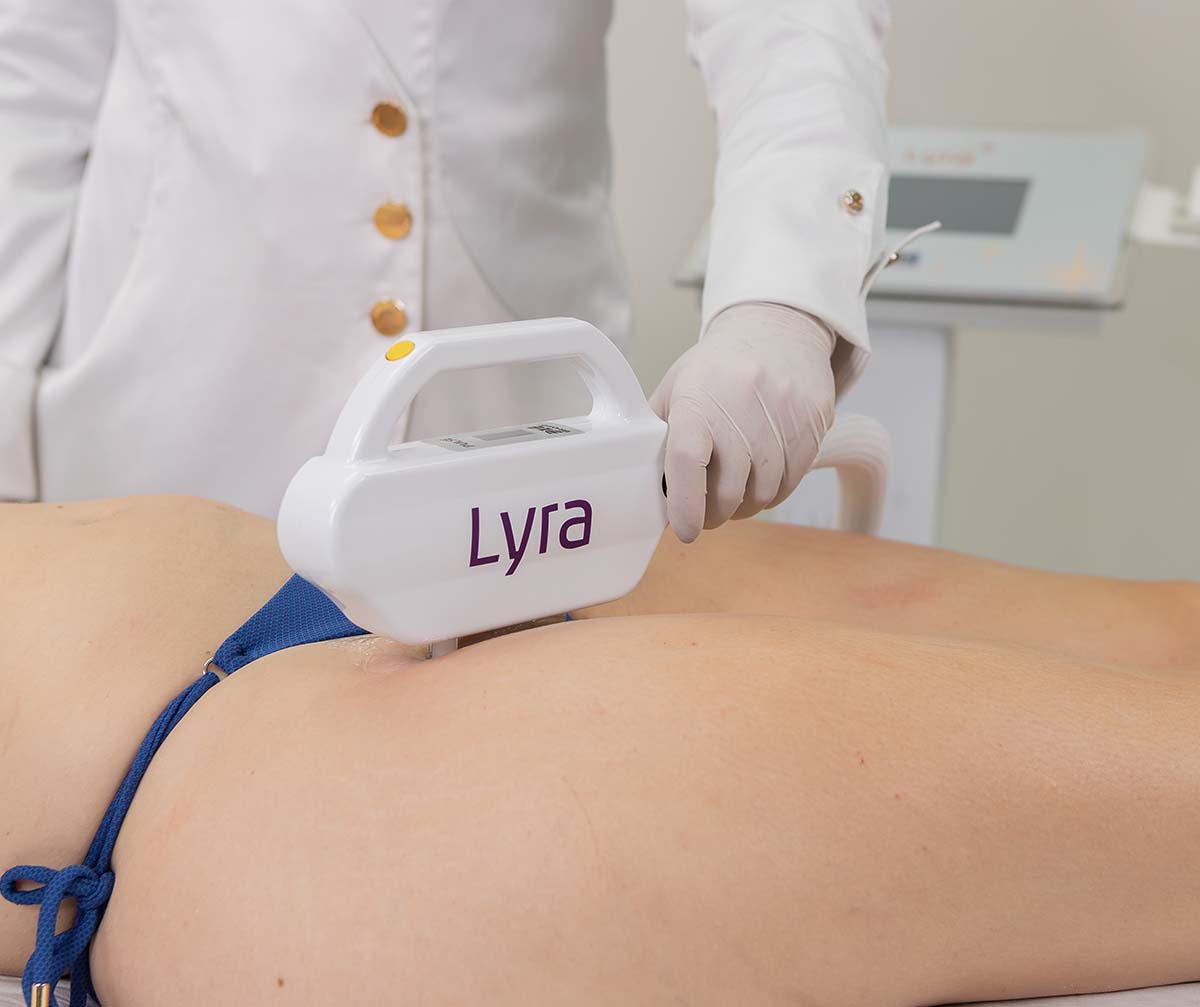
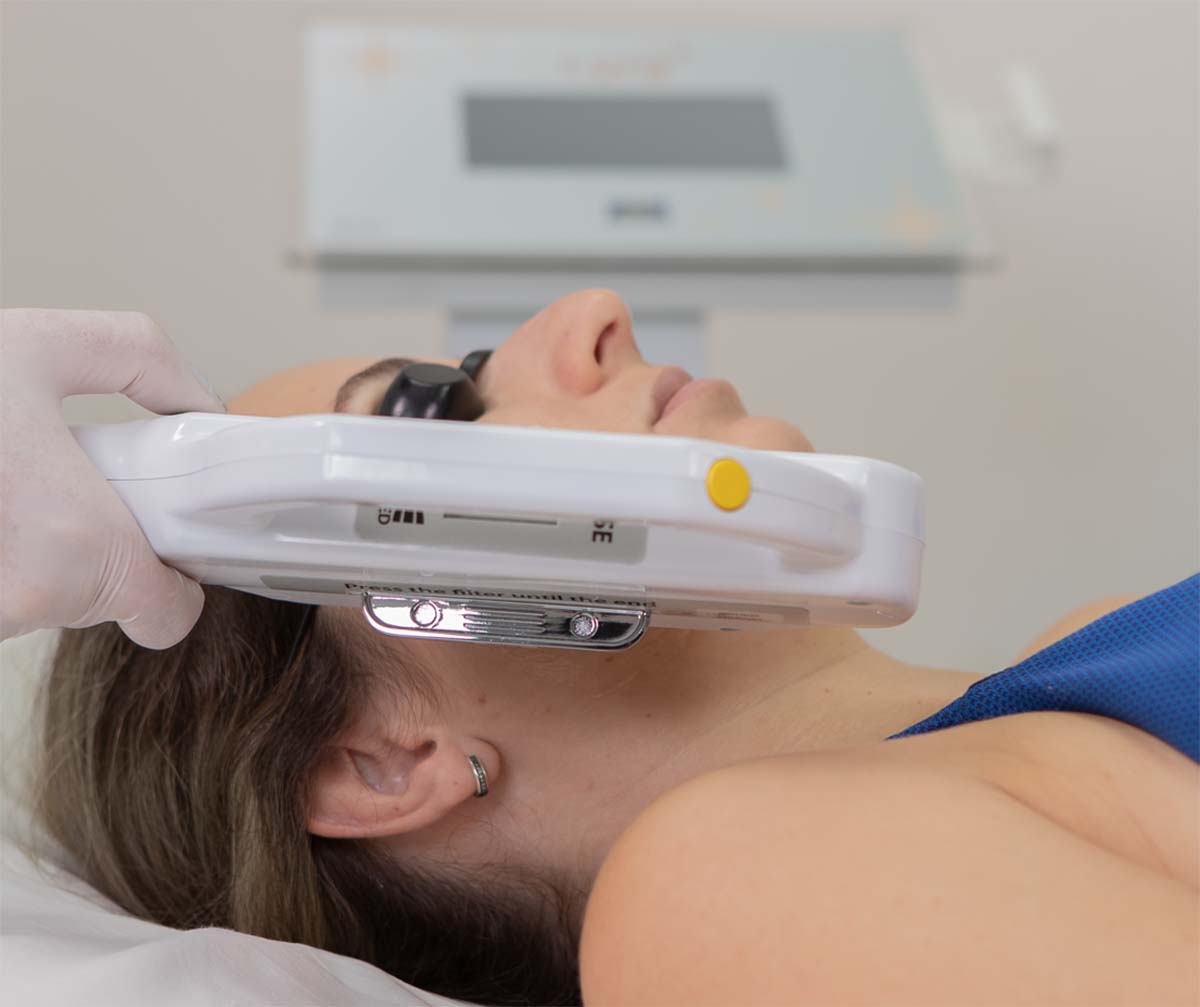
- Use handpiece to target the treatment area.
- Press and hold the foot pedal during procedure.
- Fire pulses using the activation trigger.
- Move the handpiece with 1–2 mm overlap between pulses.
- Complete passes across the entire area.
- Finalize device programming.
Post-treatment
- Remove gel, apply soothing gel/cream to treated area.
- Clean handpiece tip with soft cloth or tissue using 0.5% alcoholic chlorhexidine.
- Inspect treated area.
Reinforce post-care and instructions.
Mechanism of Action & Physiological Effects
IPL therapy is a high-power light-based modality that relies on selective photothermolysis—light energy is absorbed by target chromophores, converted to heat, and selectively destroys target structures, while sparing adjacent tissues.
Though similar in effect to high-power lasers, IPL and lasers differ technologically. IPL requires presence of chromophores (melanin, hemoglobin) to absorb specific wavelengths.
IPL emits incoherent, non-collimated, polychromatic light (400–1200 nm), thus affecting multiple chromophores (melanin, hemoglobin, water) simultaneously. This broad-spectrum capability makes it versatile for treatments such as acne, telangiectasias, pigmented lesions, photorejuvenation, and hair reduction. Number of sessions varies by therapeutic goal, skin phototype, and individual response.
Indications
- Hair removal (permanent reduction).
- Rosacea.
- Acne-prone skin.
- Telangiectasias.
- Benign pigmentary lesions.
- Photoaging and skin rejuvenation.
Included Accessories
- 1× IEC female PP cable (3 × 0.75, 1500 mm)
- 1× IPL applicator (7.5 cm²)
- Filters: 640 nm, 530 nm, 480 nm
- 1× Operator protection eyewear
- 1× Patient protection eyewear
- 1× Foot pedal activation
- 1× Digital operation manual (Lyra)
- 1× 8 mm push-in plug
- 1× 20 AG, 10 A fuse
- 1× Funnel for reservoir filling
- 1× Small plastic Lyra case (pink crystal)
Precautions
- Avoid sun exposure to treated areas for at least 5 days; daily use of SPF 60 sunscreen strongly recommended.
- Pre-treatment medical evaluation advised for patients with any skin pathology.
- Contraindications include use of antibiotics, vitamin A or K supplements, or melanin-stimulating agents.
- Avoid other hair removal methods 2 weeks before and after IPL; shaving only.
- High-phototype or heavily tanned skin requires cautious dosage adjustment.
- Temporary erythema or edema may occur—resolves in up to 3 hours with cooling or soothing gel.
- Rarely, more intense erythema resolves within 2–7 days; soothing agents may assist recovery.
Adverse Reactions (Possible, Mostly Mild)
- Transient hyperpigmentation (resolves without intervention within 6 months).
- Dyschromias.
- Pruritus.
- Burns.
- Local erythema or edema (lasting 30 minutes to 72 hours).
- Purpura.
No significant serious adverse events have been reported when properly dosed.
Dúvidas frequentes sobre
este equipamento IBRAMED
Como avaliar o fototipo de pele para aplicação do Lyra?
Para avaliar o tipo de pele do paciente use a classificação de Fitzpatrick (Figura 64). Leve em consideração se o paciente tem uma cicatriz escurecida na zona de uma ferida ou tenha um histórico de queloide ou uma cicatriz hipertrófica. Isso pode indicar um potencial para mudança da pigmentação.
Tenha em mente que o tom de pele do paciente pode aparentar ser mais escura durante o verão devido a maior exposição ao sol. Se houver dúvidas sobre o real fototipo de pele, sempre trate o paciente de acordo com a opção mais alta.
Qual intervalo entre sessões e quantidade de sessões para os tratamentos?
O intervalo médio é de 21 a 30 dias entre as sessões, e a quantidade de sessões varia entre 4 a 10 sessões conforme o objetivo terapêutico.
Quais fatores podem influenciar no tratamento com LIP?
O fototipo cutâneo, a espessura e cor da pele e dos pelos, profundidade e tipo de cromóforo-alvo, uso de medicamentos fotossensibilizantes e bronzeamento recente podem influenciar no tratamento com LIP.
Como realizo o abastecimento do reservatório de água?
Remova os dois plugues dos conectores de abastecimento. Depois, conecte as mangueiras à entrada de água (Water Supply) e à saída de água (Water Vent). Abasteça lentamente o reservatório com água destilada ou desmineralizada (4 litros) até o extravasamento pela mangueira (Water Vent).
Como realizar o pré-teste de aplicação do Lyra?
Selecione uma área discreta com tom de pele (fototipo) similar à área a ser tratada, programe o equipamento e aplique 1 ou 2 disparos no local. Observe a reação imediatamente após 10 a 15 minutos.